Accessory Dwelling Units (ADUs) have become one of California’s most popular housing solutions, offering extra living space, rental opportunities, and added property value. In 2026, size limits remain a central question for homeowners planning a project. Understanding the statewide rules, along with how local ordinances shape them, is the first step to building a compliant and profitable ADU.
What Are the Current ADU Size Limits in California?
California sets statewide standards for Accessory Dwelling Units, giving homeowners flexibility while preserving neighborhood character. These rules define clear maximums for detached, attached, and junior ADUs. While local ordinances may impose additional restrictions, the following limits provide a reliable framework for most residential projects across the state in 2026:
- Detached ADUs: Up to 1,200 sq ft allowed statewide
- Attached ADUs: Maximum of 1,200 sq ft, or 50% of the primary residence’s size
- Junior ADUs (JADUs): Capped at 500 sq ft
These guidelines ensure ADUs remain practical, affordable, and adaptable to different ADU property sizes. By following them, homeowners can better plan their project scope and avoid costly design revisions later in the approval process.
How Local Zoning Rules Affect ADU Size Limits?
While California law provides a baseline for ADU construction, cities and counties retain authority to apply additional restrictions. These local ordinances often refine what is actually possible on a given property.
Homeowners should understand that maximum square footage is not the only factor; the zoning rules frequently determine how much space can legally be built. The key zoning considerations include:
- Setbacks: Required distance between the ADU and property lines, which can shrink usable space.
- Lot coverage: Percentage of land that can be occupied by structures, potentially lowering allowable square footage.
- Floor area ratio (FAR): Ratio of building size to lot size, restricting overall buildable area.
- Height limits: May reduce options for multi-story ADUs.
- Parking requirements: In some areas, space for additional parking can affect ADU placement and size.
For example, Los Angeles applies its own zoning ADU building guides that may reduce maximum ADU dimensions compared to the state standard. This makes it crucial to verify rules with the local planning department before investing in design or permits.
Types Of ADUs: What’s the Difference?
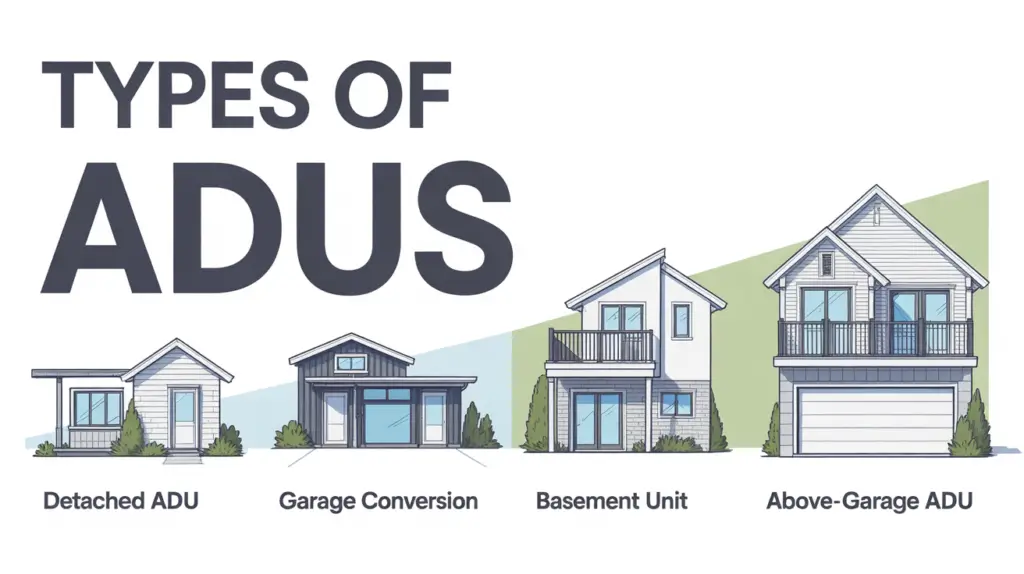
Accessory Dwelling Units come in several forms, each tailored to different household needs and property layouts. Detached ADUs act as standalone living spaces, attached ADUs extend the existing home, and Junior ADUs (JADUs) offer compact yet efficient layouts.
Understanding these distinctions is essential, as each type carries its own size rules, benefits, and design considerations explored in the next sections.
Detached ADUs: Independent Living Spaces
Detached ADUs are separate from the main house, offering full privacy and independence. These units often include kitchens, bathrooms, and living areas, functioning like small homes. They are ideal for rental purposes, guest accommodations, or multi-generational living. Their flexibility and potential income stream make them one of the most attractive options for California homeowners planning an ADU project in 2026.
Attached ADUs: Extensions of the Main Home
Attached ADUs connect directly to the existing residence, either as side extensions or conversions of attached garages. They usually share one wall with the main structure, which can reduce construction costs compared to detached units. Homeowners choose attached ADUs when they want to increase usable space without sacrificing yard area. They are especially popular on smaller lots across California’s urban areas.
Junior ADUs (JADUs): Compact but Practical Options
Junior ADUs are smaller secondary units, often created by converting part of the existing home, such as a spare bedroom or garage. California law limits these to 500 square feet, making them compact yet functional. JADUs typically share utilities with the primary residence, which helps lower construction costs. They are a practical solution for affordable housing, rental income, or private guest accommodations.
Maximum Sizes Allowed by ADU Type in 2026
The maximum square footage for an ADU depends on its classification and the local guidelines that apply. State law sets standard caps, but municipalities may modify them. Homeowners must carefully evaluate both state and city rules before beginning design.
This ensures the project avoids delays and maintains compliance throughout the approval process, particularly in highly regulated areas like Los Angeles.
Detached ADU Size Limits
Detached ADUs in California can be built up to 1,200 square feet, though some jurisdictions limit them to less. These units can include multiple bedrooms, full kitchens, and ample living space. The size flexibility makes detached ADUs highly desirable for rental income or family use. Local zoning, however, may impose stricter limits depending on lot size and neighborhood density.
Attached ADU Size Limits
Attached ADUs are capped at 1,200 square feet, or no more than 50 percent of the primary home’s living area, whichever is smaller. This ensures the addition complements the scale of the existing property. Attached units are particularly useful for expanding living space while keeping construction costs lower. Homeowners benefit from convenience, though size restrictions may be tighter in dense areas.
JADU Size Limits
Junior ADUs have a strict cap of 500 square feet, reflecting their purpose as compact housing solutions. While small, they often include essential amenities such as a kitchenette and private entrance. JADUs remain popular for budget-conscious homeowners who want extra income or space without large-scale construction. Their streamlined size also simplifies permitting and speeds up the approval process in many cities.
Special Conditions That May Allow Larger Builds
Certain circumstances may permit homeowners to exceed typical ADU size limits. Examples include properties on larger lots, projects that meet additional parking or setback requirements, or situations where local jurisdictions adopt more generous rules. State law continues to evolve, and cities often update ordinances to address housing shortages. Staying informed about changes in 2026 is critical for maximizing build potential.
Does Bigger ADU Always Mean Better ROI?
Many homeowners assume that larger ADUs guarantee better returns, but this is not always true. While size increases rental potential, it also raises construction costs and property taxes. Smaller, well-designed ADUs can generate competitive rental income and attract buyers who prefer efficient spaces. The smartest approach balances investment cost with market demand, ensuring both immediate and long-term financial benefits.
Thinking About an ADU in 2026? Work With an Experienced ADU Builder in Los Angeles
ADUs remain one of California’s most versatile housing options, but navigating size limits, zoning rules, and design choices requires expertise. From detached units to compact JADUs, each option offers unique advantages when carefully planned. Vertex Developers, Inc. specializes in ADU construction services that combine compliance, functionality, and value. If you are considering an ADU in 2026, trust our team to guide your project from concept to completion.