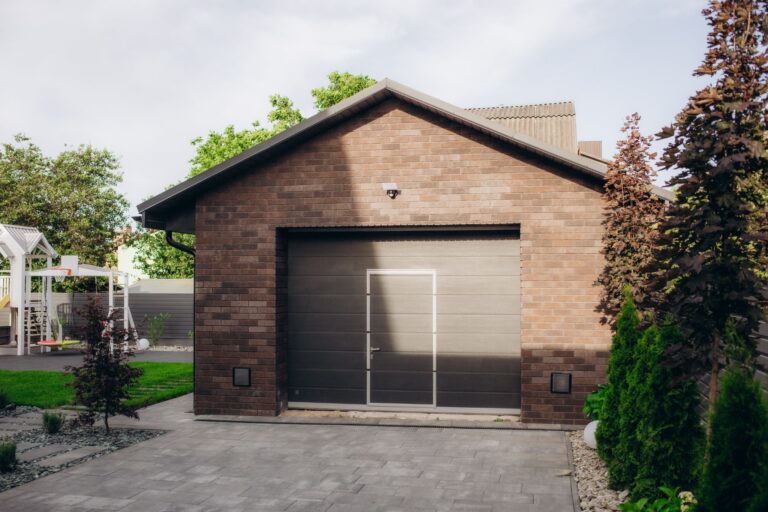
An accessory dwelling unit (ADU) is a secondary, self-contained living space built on the same lot as a primary single-family home. An ADU includes its own kitchen, bathroom, and sleeping area, and it can take the form of a detached backyard cottage, an above-garage apartment, a garage conversion, or a basement unit. Homeowners build ADUs for two main reasons: to create flexible living space for family members or tenants, and to increase the resale or refinance value of the property.
Appraisal data from the Federal Housing Finance Agency (FHFA), industry research from the National Association of Realtors (NAR), and regional studies from high-demand markets such as California consistently show that homes with a legal ADU carry a higher market value than comparable homes without one. The size of that increase depends on the ADU’s square footage, construction quality, permit status, and local rental demand, so the value impact is not identical for every property.
This article explains whether an ADU increases property value, how much value an ADU typically adds, and how appraisers calculate that value using the comparable sales, income, and cost approaches. It also covers California-specific value data, the factors that determine an ADU’s contribution to home value, situations where an ADU may not raise value, and how the cost of building an ADU compares with the value it returns.
Does an ADU Increase Property Value?
Yes, an ADU increases property value in most U.S. housing markets. An ADU adds livable square footage, functional living space, and rental income potential to a property, and each of these factors contributes to a higher appraised and market value compared with an otherwise identical home without an ADU.
The value increase applies most consistently to legally permitted ADUs, because appraisers and mortgage lenders can verify permitted square footage and include it in comparable sales and income calculations. An unpermitted structure does not receive the same appraisal treatment, which limits its effect on resale value even though it may still generate rental income. Market demand also affects the outcome: an ADU adds more value in areas with high housing costs, limited buildable land, and strong rental demand than in markets with abundant new construction and lower rents.
How Much Value Does an ADU Add to a Home?
An ADU typically adds 20% to 35% to a home’s market value, though individual studies report figures as low as 7% and as high as 35% or more depending on methodology, location, and ADU type. Formal appraisals tend to produce more conservative increases than real-estate market pricing, because appraisers rely on verified comparable sales while market pricing reflects buyer demand for the added space and income potential.
The exact percentage depends on whether the ADU is detached or attached, whether it is rented or reserved for owner use, and which valuation method an appraiser applies. The following sections break down the national value range, the difference between detached and attached ADUs, and the difference between rented and owner-use ADUs.
Average ADU Value Increase (National Range)
A legal ADU adds approximately 20% to 30% to a home’s value on average, according to industry data cited by the National Association of Realtors, with some studies reporting increases as high as 35%. A parcel-level study of Los Angeles properties found a narrower effect, with ADU presence raising assessed value and selling price by 7% to 9%, reflecting a more conservative measurement based on tax assessment data rather than market listing prices. Professional appraisers typically apply an even narrower range, increasing an appraised value by 10% to 20% when a permitted ADU is present, because appraisals depend on directly comparable sales rather than broader market trends.
These figures vary because national studies measure different data sets: some compare listing prices of homes with and without ADUs, others compare tax-assessed values, and others rely on mortgage-backed appraisal data. A homeowner should treat the 20% to 30% figure as a general planning benchmark rather than a guaranteed outcome for a specific property.
Detached ADU vs. Attached ADU
A detached ADU typically adds more property value than an attached ADU because it functions as a fully independent structure with its own footprint, privacy, and design flexibility. Attached ADUs are also subject to size restrictions in many jurisdictions; California zoning rules, for example, commonly limit an attached ADU to 50% of the primary home’s existing square footage, which caps the additional livable space and the resulting value increase.
A detached ADU built on a 1,200-square-foot home could add 600 square feet or more of independent living space, while an attached addition on the same lot might be limited to roughly 600 square feet under a 50% cap, and often less once setback and lot-coverage rules apply. Because detached units offer greater privacy and rental independence, buyers and appraisers generally assign them a higher per-square-foot value than an attached unit of comparable size.
Rented ADU vs. Owner-Use ADU
A rented ADU generally adds more appraised value than an owner-use ADU because rental income allows an appraiser to apply the income approach in addition to the comparable sales approach. A documented lease and consistent rental history give a lender or appraiser verifiable evidence of the unit’s income-generating capacity, which supports a higher valuation, particularly for investment or refinance appraisals.
An owner-use ADU, such as a guest suite or home office, still adds value through additional square footage, functional utility, and buyer appeal for multigenerational households, but it lacks the income documentation that strengthens a rental unit’s valuation. Homeowners who plan to sell rather than refinance can still benefit from owner-use configurations, since many buyers value flexible space even without existing rental income.
How Is ADU Value Calculated?
Appraisers calculate ADU value using one or a combination of three standard methods: the comparable sales approach, the income approach, and the cost approach. Each method produces a different estimate, and the appraiser selects the method, or blend of methods, that best fits the available data for the property’s location and ADU type.
The comparable sales approach relies on recent sales of similar homes with ADUs. The income approach capitalizes the ADU’s rental income into an added property value. The cost approach estimates the expense of rebuilding the ADU today, adjusted for depreciation. Appraisers also encounter specific obstacles when valuing ADUs, which can lead to undervaluation in some markets.
Comparable Sales (Comps) Approach
The comparable sales approach values an ADU by comparing the subject property with recently sold homes that have a similar ADU in the same market area. An appraiser identifies sales of homes with matching or similar ADU square footage, condition, and permit status, then adjusts the subject property’s value based on differences between the properties.
This approach produces the most market-accurate valuation when enough qualifying comparable sales exist nearby. In markets where ADUs remain uncommon, an appraiser may need to expand the search radius or use older sales data, which can reduce the accuracy of the resulting value estimate.
Income Approach (Rental Value Capitalization)
The income approach calculates ADU value by capitalizing the unit’s monthly or annual rental income into an added property value. A commonly cited rule of thumb applies a multiple of roughly 100 times the ADU’s monthly rent to estimate its contribution to property value; a unit renting for $2,500 per month would add approximately $250,000 under this rule of thumb.
Lenders and appraisers who use the income approach for mortgage underwriting typically apply more conservative capitalization rates than this simplified multiple, and they require documented lease agreements or market rent surveys to support the estimate. The income approach carries the most weight for rented ADUs and investment property refinances, where verified cash flow directly affects loan qualification.
Cost Approach
The cost approach estimates ADU value by calculating the current cost to construct an equivalent unit, then subtracting depreciation for age, condition, and design. This method applies most often when few or no comparable ADU sales exist in the area, since it does not depend on market transaction data.
The cost approach tends to produce a valuation that reflects construction expense rather than buyer demand, so it can undervalue an ADU in a high-demand rental market and overvalue one in an area with limited rental interest. Appraisers typically use the cost approach as a supporting method alongside comparable sales or income data rather than as the sole valuation basis.
Why Appraisers Sometimes Undervalue ADUs
Appraisers sometimes undervalue ADUs because of a shortage of comparable sales data, inconsistent local appraisal guidelines, and limited appraiser familiarity with ADU-specific valuation methods. Mortgage-backed appraisal datasets, including the FHFA’s Uniform Appraisal Dataset, began tracking ADU presence as a distinct property characteristic only in 2023, which means historical comparable data remains limited in many markets.
Unpermitted ADUs compound the undervaluation problem, since appraisers generally cannot credit square footage or income that does not appear on permit records or the property title. Conservative lending guidelines for income capitalization can also produce a lower value estimate than the ADU’s actual market rent would suggest, particularly in fast-appreciating rental markets.
How Much Does an ADU Increase Property Value in California?
An ADU increases property value in California by an estimated 25% to 50% on average, with some high-demand markets reporting increases as high as 58%. FHFA appraisal data shows that the median appraised value of California single-family homes with an ADU reached $1,064,000 in 2023, compared with $715,000 for comparable homes without an ADU, and that properties with ADUs recorded annualized value growth of 9.34% from 2013 to 2023, compared with 7.65% for properties without one.
California’s statewide housing shortage and high land costs contribute to the elevated value premium compared with the national average. State legislation since 2017 has also simplified ADU permitting across most California cities, increasing the supply of comparable ADU sales data that supports stronger appraisal outcomes.
California ADU Value by Region
ADU value increases vary by California region, ranging from roughly 25% to 35% in San Diego, up to 39% in Bay Area and similarly competitive coastal markets, and as high as 58% in parts of Los Angeles. San Diego homeowners have reported value increases from around 25% to 35% in typical cases, with exceptional properties reaching increases of up to 50%. Bay Area and comparably priced coastal markets have shown average increases near 39% based on analysis of more than 1,000 ADU projects in similarly high-cost areas.
Los Angeles has recorded some of the state’s largest documented gains, with typical increases in the 25% to 35% range and select high-demand neighborhoods reaching increases of up to 58%. These regional differences track closely with local land values, rental rates, and the availability of comparable ADU sales for appraisers to reference.
Factors That Determine How Much Value Your ADU Adds
The amount of value an ADU adds to a specific property depends on four primary factors: the unit’s size and livable square footage, its build quality and finishes, its permitted or unpermitted status, and local market demand for rental units. These factors interact, so a large, well-built, permitted ADU in a high-rental-demand area produces the strongest value increase, while a smaller or unpermitted unit in a low-demand area produces a smaller increase.
Homeowners planning an ADU for value purposes should evaluate each factor before construction, since decisions made during design and permitting directly affect the eventual appraisal outcome.
Size and Livable Square Footage
Larger livable square footage generally increases an ADU’s contribution to property value, since appraisers and buyers evaluate added space on a per-square-foot basis. A 1,000-square-foot detached ADU typically adds more total value than a 400-square-foot studio conversion, even when the smaller unit costs less to build, because the larger unit provides more usable living area and stronger rental income potential.
Diminishing returns can apply when an ADU’s size significantly exceeds the primary home’s size or the neighborhood’s typical home size, since comparable sales data becomes harder to find and buyer demand for oversized secondary units declines.
Build Quality and Finishes
Higher-quality construction and finishes increase an ADU’s value contribution by improving its comparability with recently built, well-appointed homes in the same market. Updated kitchens, durable flooring, energy-efficient windows, and modern bathroom fixtures raise both the ADU’s rental appeal and its appraised comparability with similar new-construction units.
A converted garage or basement with minimal finish work typically adds less value than a purpose-built unit with full kitchen and bathroom installations, since appraisers and renters treat basic conversions as lower-tier living space.
Permitted vs. Unpermitted Status
A permitted ADU adds substantially more property value than an unpermitted ADU because only permitted square footage appears on the property title and supports a formal appraisal. Lenders generally will not include an unpermitted unit’s square footage or rental income in a mortgage appraisal, which limits the property’s financeable value even if the unit physically exists and generates income.
An unpermitted or tiny-home-style ADU that does not appear on a title report typically contributes value only through the rental income it produces, rather than through an increase in the home’s appraised or resale value. Homeowners planning to sell or refinance benefit from completing permits before the property goes to appraisal.
Local Market Demand for Rental Units
Strong local rental demand increases an ADU’s value contribution by supporting higher achievable rents, which raises the unit’s value under the income approach. Markets with limited rental housing supply and high average rents, such as coastal California metro areas, produce larger ADU value premiums than markets with abundant rental inventory and lower rents.
An ADU built in a market with weak rental demand may still add value through additional square footage and buyer appeal, but it will not benefit from the income-driven premium that strengthens valuations in high-demand rental markets.
When an ADU Might Not Increase Property Value
An ADU might not increase property value when it remains unpermitted, when its size or cost significantly exceeds what comparable buyers in the area expect, or when local market conditions limit demand for secondary rental units. An unpermitted ADU does not appear on the property title or support a formal appraisal, so it typically does not raise the home’s resale value even when it generates rental income.
An oversized or luxury-finished ADU built beyond the norm for its neighborhood may not recoup its full construction cost in added value, because appraisers rely on comparable sales that reflect typical local ADU sizes and finish levels. A poorly located ADU on a small lot, one that eliminates required parking or yard space, or one built in a market with weak rental demand and abundant housing supply can also produce a smaller value increase than the construction cost would suggest. Homeowners association restrictions, unresolved code violations, and deferred maintenance on the ADU further reduce its net contribution to property value.
How to Maximize Your ADU’s Value Before Selling or Refinancing
A homeowner maximizes an ADU’s value before selling or refinancing by finalizing all required permits, documenting rental income, and preparing complete records for the appraiser before the valuation occurs. Closing out any open permits and obtaining a final inspection sign-off ensures the ADU’s square footage can be credited on the appraisal and property title, which directly affects both the comparable sales and cost approach calculations.
Homeowners with a rented ADU should compile a signed lease, rent payment history, and any local market rent surveys, since this documentation supports the income approach and can raise the appraised value beyond what square footage alone would produce. Addressing deferred maintenance, updating outdated finishes, and ensuring the ADU meets current code requirements before the appraisal reduces the risk of a lower valuation due to condition-based deductions. Providing the appraiser with a list of recent comparable ADU sales in the area, when available, can also support a more accurate and favorable valuation.
ADU Value vs. ADU Cost – Is Building One Worth It?
Building an ADU is generally worth the investment when the added property value and rental income exceed the construction cost, which is the case for most permitted ADUs in high-demand markets. ADU construction costs in the United States typically range from $75,000 to $450,000 or more, depending on size, ADU type, and regional labor and material costs, while the resulting value increase commonly falls in the 20% to 35% range described earlier in this article.
Documented examples illustrate a favorable return in strong markets: a San Diego homeowner who spent approximately $200,000 on a 500-square-foot detached ADU saw the home’s value rise by roughly $300,000, and comparable Los Angeles projects have produced value increases exceeding the original construction cost. These outcomes depend heavily on local land values and rental demand, so the same construction budget produces a smaller return in markets with lower home prices and rents. A homeowner evaluating whether to build should compare local construction cost estimates against the value and rental income data for permitted ADUs in their specific market, since the financial outcome varies significantly by region, ADU type, and permit status.