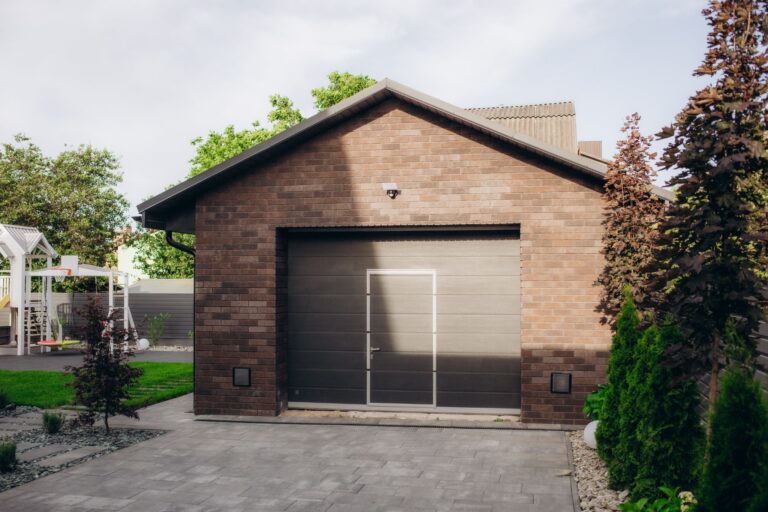
An accessory dwelling unit (ADU) or garage conversion can provide rental income by adding a legally permitted, independent living space to a residential lot. In Los Angeles, homeowners can convert an existing garage or build a new detached, attached, or junior ADU under state and local laws that permit these units on nearly every residential parcel. The finished unit can then be leased as a long-term rental, generating monthly income separate from the primary residence.
Rental income from these units depends on unit size, location, finish quality, and local regulation. A studio garage conversion in a lower-demand neighborhood generates less monthly income than a one- or two-bedroom detached ADU in a high-demand area such as the Westside. Construction cost, financing terms, and ongoing expenses such as property tax and maintenance also affect the net return.
Los Angeles regulates ADUs and garage conversions through the Los Angeles Department of Building and Safety (LADBS), which processes these projects as ministerial permits under California state ADU law. This designation removes discretionary review and public hearings for qualifying projects, which shortens the permitting timeline compared with other types of residential construction.
This article explains what qualifies as an ADU or garage conversion, how much rental income these units typically generate, what a Los Angeles garage conversion costs, how the investment compares with building a new ADU, common obstacles to expect, and how to select a contractor for the project.
What Counts as an ADU or Garage Conversion?
An ADU or garage conversion is a self-contained residential unit built on the same lot as a primary home, with its own kitchen, bathroom, and independent entrance. California law defines an ADU as an attached or detached residential unit that provides complete, independent living facilities on a lot with an existing or proposed primary residence. A garage conversion is one method of creating this unit: it repurposes an existing attached or detached garage structure instead of constructing a new building from the ground up.
Los Angeles permits ADUs and garage conversions on residential lots citywide, including zones designated R1, R2, R3, R4, R5, RD, RW, RE, RS, and RA. Because the unit already exists as a structure, a garage conversion typically requires less construction than a new detached ADU, which affects both cost and permitting timeline. The distinction between conversion types and new construction becomes relevant when selecting the most practical option for generating rental income, which the following sections address in detail.
Garage Conversion ADU vs. Detached ADU vs. Junior ADU (JADU)
A garage conversion ADU, a detached ADU, and a junior ADU (JADU) differ in structure, size limits, and construction scope. A garage conversion ADU repurposes an existing garage into a legal dwelling unit, typically 200 to 600 square feet depending on whether it was a one-car or two-car garage. A detached ADU is a new freestanding structure built separately from the main home, with a maximum size of 1,200 square feet under state law. A JADU is a unit created within the walls of the existing primary residence, capped at 500 square feet, and it commonly shares one or more systems, such as water or electrical service, with the main house.
Each unit type carries different construction requirements. A garage conversion reuses the existing foundation, framing, and roof, which reduces the scope of work to interior systems, insulation, and code compliance. A detached ADU requires a new foundation, full framing, and a complete building envelope. A JADU requires interior remodeling of the primary residence and, in many cases, a separate exterior entrance. These differences directly affect the cost and rental income comparisons discussed later in this article.
How Much Rental Income Can a Garage Conversion or ADU Generate?
A garage conversion or ADU in Los Angeles generates rental income primarily through long-term leases, with short-term rental use restricted for most units. Monthly rent depends on unit size, bedroom count, neighborhood, and finish quality, and it typically ranges from about $1,500 for a modest studio in a lower-demand area to more than $4,000 for a well-finished one- or two-bedroom unit in a high-demand neighborhood.
Rent scales with bedroom count in a consistent pattern across the city. A studio unit generates the lowest monthly rent, a one-bedroom unit generates a moderate premium, and a two-bedroom unit generates the highest rent among standard ADU configurations. Location within Los Angeles produces a wider range in achievable rent than unit size alone, which the following sections quantify by rental structure and term length.
Long-Term Rental Income by Unit Type
Long-term rental income for a garage conversion or ADU in Los Angeles ranges from roughly $1,500 to $2,600 per month for a studio, $2,000 to $3,500 per month for a one-bedroom unit, and $2,800 to $4,200 per month for a two-bedroom unit, depending on neighborhood. Coastal and Westside neighborhoods, including Santa Monica, Venice, and Culver City, command rents at the top of these ranges due to proximity to employment centers and limited rental supply. The San Fernando Valley, including Sherman Oaks and Studio City, typically produces mid-range rents for comparable unit sizes. East Los Angeles, South Los Angeles, and Mid-City generally fall at the lower end of the citywide range.
Finish quality and included amenities affect achievable rent within each neighborhood tier. In-unit laundry, private outdoor space, and a dedicated parking spot each add a measurable rent premium in competitive submarkets. A well-priced, well-finished unit in a high-demand neighborhood commonly leases within two weeks of listing, reflecting the low citywide vacancy rate for newly built ADUs.
Short-Term Rental Income Potential
Short-term rental income potential for most ADUs and garage conversions in Los Angeles is limited by the city’s Home-Sharing Ordinance, which restricts short-term listings to a host’s primary residence. Under this ordinance, an ADU permitted on or after January 1, 2017 cannot be listed as a short-term rental unless the ADU itself serves as the host’s primary residence, meaning the homeowner would need to live in the converted unit and rent the main house short-term instead.
This restriction applies within the City of Los Angeles. Unincorporated areas of Los Angeles County and neighboring cities, such as Santa Monica, West Hollywood, and Pasadena, operate under separate short-term rental ordinances with different eligibility rules. A homeowner considering short-term rental income from a new unit should confirm current local rules before budgeting on nightly rates, since a violation carries fines and potential suspension of any home-sharing registration. Because of these restrictions, most Los Angeles ADU and garage conversion projects are underwritten as long-term rentals rather than short-term or vacation rentals.
Garage Conversion Costs and Rules in Los Angeles
Garage conversion costs and rules in Los Angeles are governed by LADBS permitting requirements and California state ADU law, and total project cost typically ranges from roughly $80,000 to $220,000 depending on garage size, condition, and finish level. Because the projects proceed through ministerial review rather than discretionary approval, the applicable rules focus on building code compliance, zoning conformance, and permit fees rather than neighborhood hearings or design review boards.
Homeowners planning a garage conversion in Los Angeles need to budget for three categories of requirement: construction cost, permit and plan-check fees, and zoning conformance. Each of these factors affects both the project timeline and the eventual rental return, and each is addressed separately in the following sections.
Average Garage Conversion Cost in Los Angeles
The average cost to convert a garage into an ADU in Los Angeles ranges from about $80,000 to $220,000, with most projects landing between $100,000 and $160,000 for a standard one- or two-car garage. Cost per square foot typically falls between $125 and $400, with the wide range reflecting differences in garage condition, plumbing scope, and finish quality.
A basic conversion that keeps the existing garage footprint intact and adds a kitchen, bathroom, flooring, and a mini-split HVAC system falls at the lower end of this range. A mid-range conversion that requires structural reinforcement, a small footprint addition, or upgraded finishes falls toward the middle. Costs increase further when the existing garage requires seismic retrofitting, foundation repair, or a full electrical service upgrade, since these items add to the structural and systems scope before interior finish work begins. Separate design and permitting costs, typically $8,000 to $15,000 for architectural plans and Title 24 energy compliance documentation, apply in addition to construction cost.
How to Get a Garage Conversion Permit in Los Angeles
To get a garage conversion permit in Los Angeles, a homeowner submits an ADU application to LADBS along with architectural plans, structural documentation, and a Title 24 energy compliance report. Because state law classifies qualifying ADU and garage conversion applications as ministerial, LADBS must issue a decision without a public hearing, and current law requires a completeness determination within about 15 business days and a final decision within 60 days of a complete submission.
The process generally follows four stages. First, the homeowner or a designer confirms the garage qualifies for conversion, meaning it was legally permitted and has an adequate foundation and ceiling height. Second, the design team prepares conversion plans, which include the interior layout, egress windows, smoke and carbon monoxide detectors, and structural and energy compliance documents. Third, the plans go through LADBS plan check, which can take from two to several weeks depending on project complexity and whether the plans use LA’s Standard Plan Program for pre-approved designs. Fourth, once the permit is issued, construction proceeds through a series of inspections covering framing, electrical, plumbing, insulation, and final occupancy before LADBS issues a certificate of occupancy.
Los Angeles ADU and Garage Conversion Zoning Requirements
Los Angeles zoning requirements allow ADUs and garage conversions on nearly every residential lot in the city, including zones R1 through R5, RD, RW, RE, RS, and RA, and state law overrides most local restrictions that would otherwise limit these projects. A detached ADU is subject to a 1,200-square-foot maximum size, a 16-foot height limit, and minimum side and rear setbacks of 4 feet under current state standards. A garage conversion that keeps the existing structure’s footprint generally does not need to meet new setback requirements, since it reuses an already-permitted structure rather than adding new building area.
California ADU law also removes the parking replacement requirement for garage conversions, meaning a homeowner who converts a garage that previously provided required covered parking does not need to add a replacement parking space elsewhere on the lot. This provision removes one of the largest potential cost and space obstacles to garage conversion projects in denser Los Angeles neighborhoods.
Return on Investment: Is Converting a Garage Worth It?
Converting a garage into a rental unit is generally worth the investment in Los Angeles, since the combination of monthly rental income and added property value typically produces a positive return within roughly five to nine years. Because a garage conversion reuses an existing structure, its construction cost per square foot is usually lower than a new detached ADU, which shortens the payback period relative to ground-up construction for a comparable rental return.
The return on a garage conversion depends on financing structure, local rental demand, and ongoing operating costs such as property tax, insurance, and maintenance reserves. The following sections break down the payback timeline, financing considerations, and the effect of a completed conversion on overall property value.
Payback Period and Financing Options
The payback period for a Los Angeles garage conversion typically runs from five to nine years, calculated by dividing total project cost by annual net rental income after operating expenses. A conversion costing $120,000 that rents for $2,200 per month generates roughly $26,400 in gross annual income; after property tax, insurance, and a maintenance reserve, net annual cash flow is lower, which extends the simple payback period beyond a calculation based on gross rent alone.
Homeowners finance garage conversions through several common methods, including a cash-out refinance of the primary mortgage, a home equity line of credit (HELOC), a renovation loan, or a contractor-arranged financing program. Some California programs also offer grant funding toward ADU construction for qualifying homeowners, which can reduce the amount financed and shorten the payback period. The most favorable financing option depends on the homeowner’s existing mortgage rate, available home equity, and overall project budget.
Impact on Property Value
A completed garage conversion increases the appraised value of a Los Angeles property, with published appraisal estimates attributing roughly 60% to 75% of ADU construction cost to added property value. This means a garage conversion costing $150,000 can add roughly $90,000 to $110,000 in appraised value, in addition to the ongoing rental income the unit generates while the owner retains the property.
The value impact varies by neighborhood, lot configuration, and the quality of the finished unit. A well-finished conversion in a neighborhood with strong rental demand tends to produce a stronger valuation increase than a comparable conversion in a lower-demand area, since appraisers weigh both construction quality and the unit’s income-generating potential when estimating contributory value.
Garage Conversion vs. Building a New ADU
A garage conversion costs less and permits faster than building a new detached ADU, but a new ADU offers more design flexibility and a larger maximum size for rental income. Garage conversion costs in Los Angeles typically range from $80,000 to $220,000, while new detached ADU construction typically ranges from $200,000 to $450,000 or more, reflecting the added cost of a new foundation, framing, and building envelope.
Construction timeline also differs between the two options. A garage conversion typically moves from permit application to move-in within five to eight months, while a new detached ADU typically takes nine to fourteen months due to the additional site work and construction scope. In exchange for the added cost and time, a new detached ADU can be built up to the state’s 1,200-square-foot maximum, which allows for a larger unit with a higher potential rent than most garage footprints can accommodate. A garage conversion suits homeowners who want the lowest-cost, fastest path to a rentable unit, while a new ADU suits homeowners prioritizing maximum rentable square footage and long-term rental income over upfront cost and speed.
Common Problems and Limitations of Garage Conversion Rentals
Common problems with garage conversion rentals in Los Angeles include the loss of covered parking, permitting delays, inspection failures, and unexpected structural costs discovered once construction begins. While state law removes the requirement to replace parking lost to a conversion, the homeowner and any future tenants still lose the physical use of that space, which can affect day-to-day convenience and street parking availability in denser neighborhoods.
Older garages also frequently require work beyond a simple interior remodel. A garage built decades earlier may need foundation repair, seismic retrofitting, or a full electrical panel upgrade to meet current building code, and these items add cost and time beyond the base conversion budget. The following sections address two of the most common categories of obstacle in more detail.
Parking Loss and Neighborhood Restrictions
Parking loss from a garage conversion removes covered, and sometimes uncovered, parking capacity from the property without requiring replacement under California ADU law. In neighborhoods with limited off-street or street parking, this loss can create friction with neighbors or increase competition for curbside parking, even though the conversion itself complies with zoning law. Some homeowners choose to add an uncovered parking pad or carport voluntarily, even without a legal requirement to do so, to preserve some off-street parking capacity for the main residence.
Neighborhood-level restrictions, such as historic preservation overlay zones or specific plan areas, can add design review requirements that do not apply to a standard ministerial ADU application. A homeowner in one of these overlay zones needs to confirm applicable design standards with LADBS or the Department of City Planning before finalizing conversion plans, since these overlays can affect exterior materials, window placement, or roofline changes even when the underlying ADU use is permitted by right.
Permitting Delays and Inspection Failures
Permitting delays and inspection failures most often result from incomplete plan submissions, non-standard garage conditions, or corrections required after LADBS plan check. A submission missing required Title 24 documentation, structural calculations, or complete egress and life-safety details typically triggers a correction cycle that extends the 60-day ministerial review clock, since that clock restarts once the application is deemed complete.
During construction, inspection failures commonly involve framing that does not match approved plans, electrical or plumbing rough-in that does not meet code, or insulation and egress window sizing that falls short of Title 24 or life-safety requirements. Each failed inspection requires a correction and a re-inspection, which adds time to the overall construction schedule. Working with a designer and contractor experienced in Los Angeles ADU projects reduces the likelihood of both plan-check corrections and field inspection failures, since these professionals are familiar with LADBS’s current documentation and code requirements.
How to Choose Between a Garage Conversion and an ADU for Rental Income
Choosing between a garage conversion and a new ADU for rental income depends on the homeowner’s budget, timeline, and target rental market. A homeowner with a limited construction budget or a preference for the fastest path to rental income should prioritize a garage conversion, since it typically costs less and permits faster than a new detached ADU. A homeowner targeting a larger unit, a higher rent bracket, or a specific design that an existing garage footprint cannot accommodate should consider a new detached ADU instead.
Lot conditions also affect this decision. A homeowner without an existing garage, or with a garage in poor structural condition, may find that the cost to bring an old structure up to code approaches the cost of new construction, which reduces the financial advantage of conversion. A homeowner with a sound, appropriately sized existing garage generally achieves the strongest return by converting it rather than building new, since the existing structure reduces both cost and construction time relative to ground-up construction.
Finding a Garage Conversion Contractor in Los Angeles
Finding a garage conversion contractor in Los Angeles starts with verifying the contractor holds an active California Contractors State License Board (CSLB) license appropriate for the scope of work, along with current bonding and liability insurance. A contractor with specific experience in Los Angeles ADU and garage conversion projects is familiar with LADBS documentation requirements, the Standard Plan Program, and common causes of plan-check corrections, which reduces the risk of permitting delays.
Homeowners should request references from completed Los Angeles garage conversion projects, confirm whether the contractor manages both design and construction or works with a separate architect, and compare at least two or three itemized bids before selecting a contractor. An itemized bid should separate design and permitting costs, structural and systems work, and interior finish costs, which allows a homeowner to compare bids on a consistent basis and identify which scope items account for differences in total price.